Your bite does a lot of work. Every time you chew, speak, or clench your teeth, your upper and lower jaw come together in a way that — ideally — distributes force evenly and keeps your teeth, joints, and muscles functioning without strain. When the alignment is off, even by a small degree, that balance breaks down. Over time, the effects show up in ways that go well beyond how your smile looks.
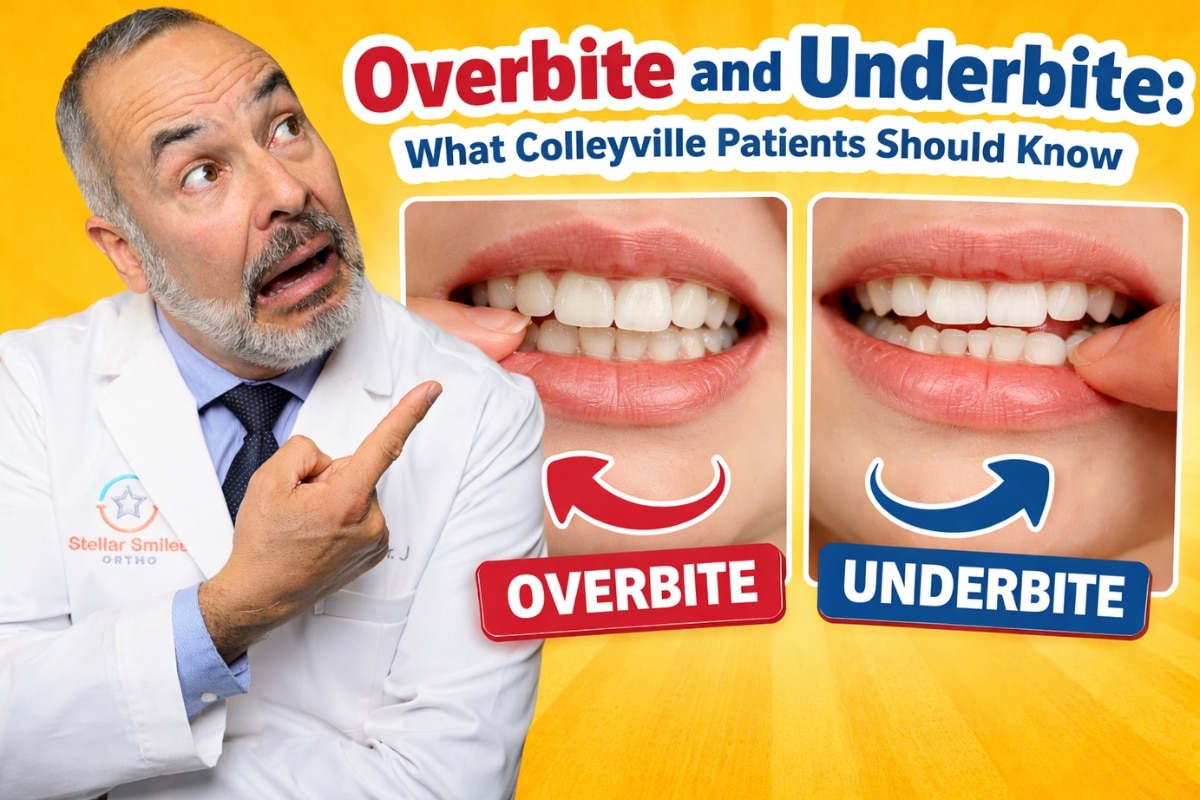
Overbite and underbite are two of the most common bite discrepancies orthodontists treat. They’re not just cosmetic concerns, and they’re not simply about whether your teeth line up neatly in photos. Both conditions can affect how you chew, how you speak, how much wear your teeth accumulate, and, in more severe cases, the health of your jaw joints. Here’s what you actually need to know about both.
What Is an Overbite and How Much Is Too Much?
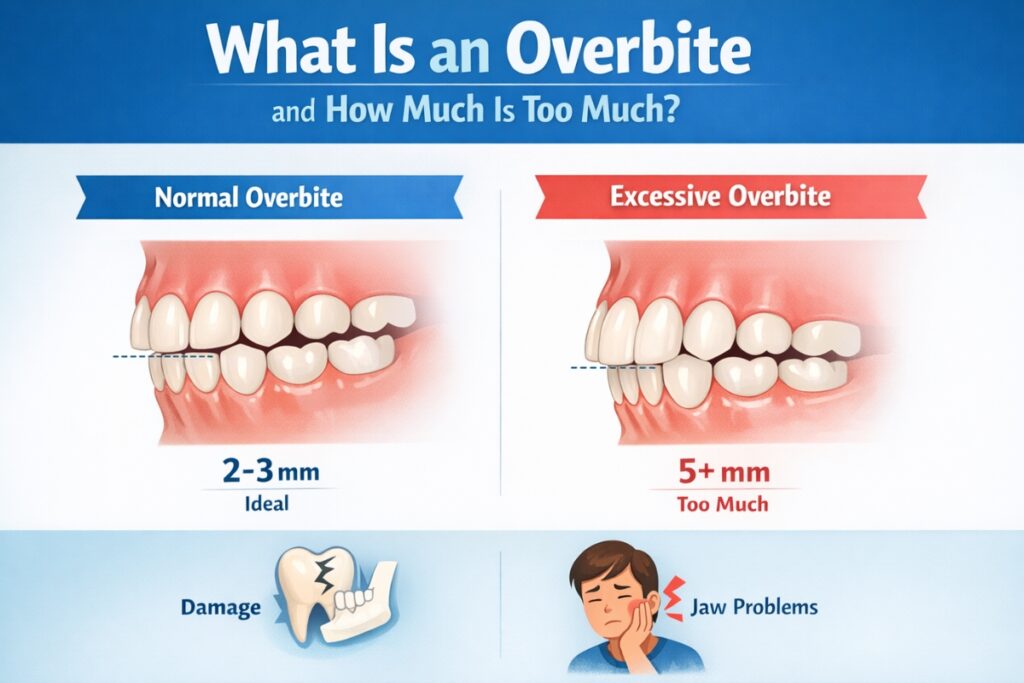
When the Upper Jaw Extends Too Far
A small amount of overbite is completely normal. In a healthy bite, the upper front teeth overlap the lower front teeth by roughly one to two millimeters vertically. The issue arises when that overlap becomes excessive (a condition referred to clinically as a deep bite or increased vertical overbite).
Overbite teeth — where the upper front teeth significantly cover the lower ones — can develop from a combination of genetic factors, childhood habits like prolonged thumb sucking or pacifier use, and jaw development patterns. In some patients, the lower jaw is simply shorter relative to the upper, which creates the characteristic appearance of the upper teeth protruding forward or downward.
Left uncorrected, a deep overbite puts the lower front teeth under continuous stress. They may bite into the soft tissue behind the upper teeth, accelerating gum recession in that area. Excessive wear on the lower incisors is also common, and in more pronounced cases, patients develop jaw muscle tension and temporomandibular joint (TMJ) discomfort over time.
For Colleyville families looking at treatment options, an orthodontist in Colleyville, TX, at Stellar Smiles evaluates not just the degree of overlap but also what’s causing it, whether it’s dental (tooth position) or skeletal (jaw structure), because the cause directly determines the treatment approach.
What Is an Underbite and Why Does It Matter?
When the Lower Jaw Sits Ahead of the Upper
An underbite is essentially the reverse scenario. With underbite teeth, the lower front teeth sit in front of the upper front teeth when the mouth is closed. In a Class III malocclusion (the clinical classification), the lower jaw protrudes forward, giving the chin a more prominent appearance and making it difficult to bring the front teeth together for a normal bite.
Underbites are less common than overbites but tend to be more complex to treat, particularly when the discrepancy is skeletal rather than dental. Mild cases involving tooth positioning can often be corrected orthodontically. More pronounced jaw discrepancies, particularly in adults whose jaw growth is complete, may require a combination of orthodontic treatment and jaw surgery (orthognathic surgery) to achieve a stable result.
Functionally, an underbite creates real challenges. Chewing efficiency decreases because the front teeth can’t perform their intended function of incising food. Speech can be affected, particularly sounds that rely on contact between the upper and lower teeth. Accelerated wear on the front teeth is common, and the strain on jaw joints over years of misaligned function can contribute to chronic discomfort.
Treatment Options: What Works for Each Condition
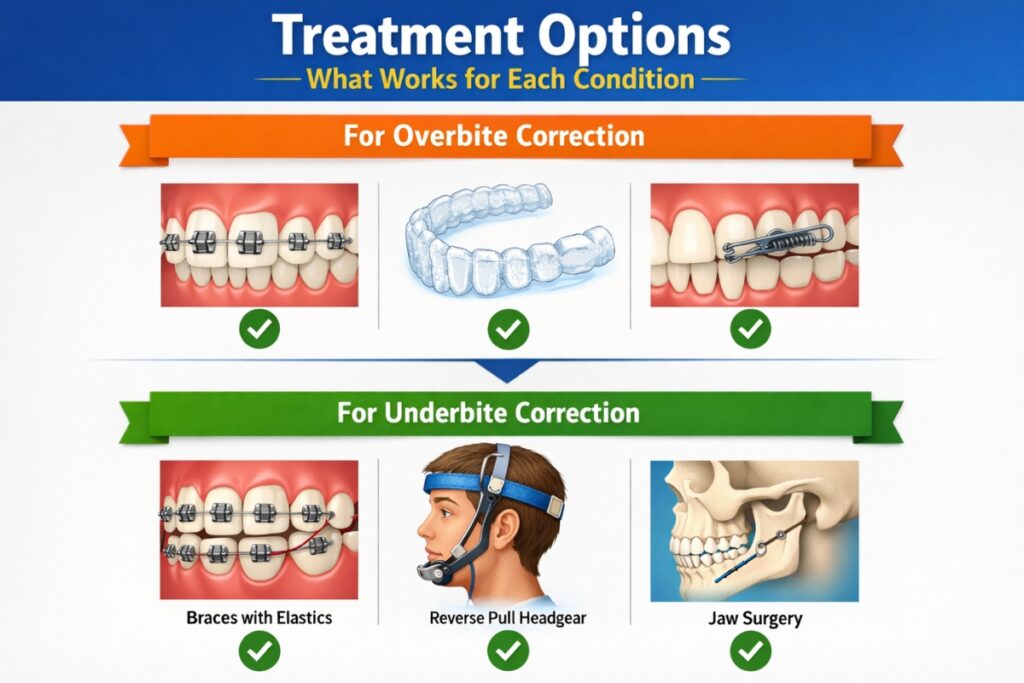
Braces, Aligners, and More
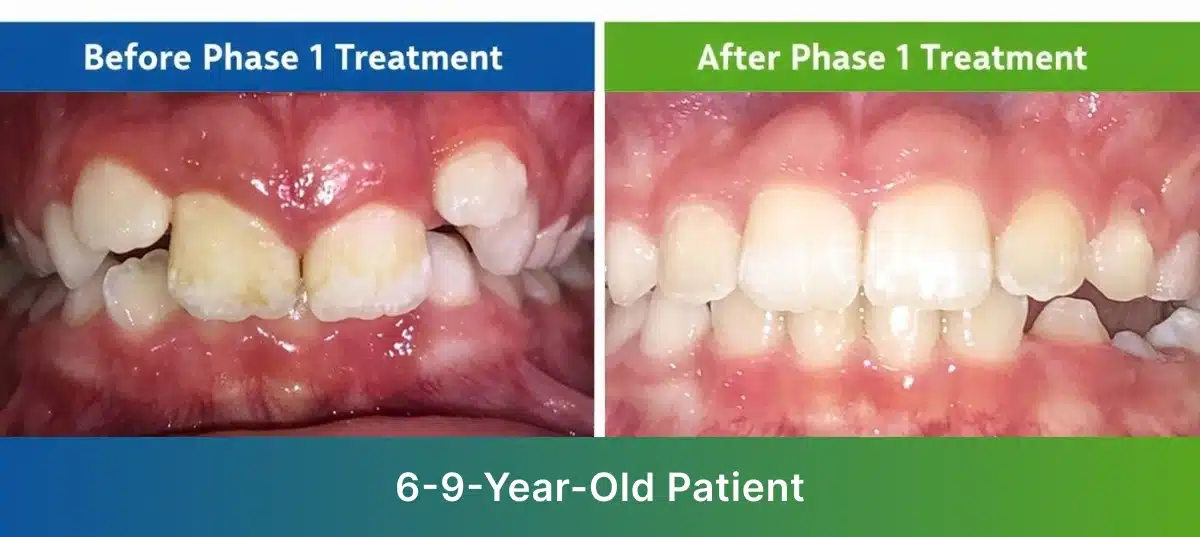
For children and adolescents, the timing of treatment matters considerably. Jaw growth is still active during these years, which means orthodontists can influence how the jaws develop — not just how the teeth sit within them. Early intervention, sometimes called Phase 1 treatment, can address skeletal patterns before they become fixed, simplifying or sometimes eliminating the need for more extensive treatment later.
For overbite correction, braces are among the most effective tools available. Fixed braces allow orthodontists to use bite turbos, functional appliances, or elastics to simultaneously bring the lower jaw forward and reduce vertical overlap. Clear aligners can also address mild to moderate overbites, though more complex cases benefit from the precision that braces provide.
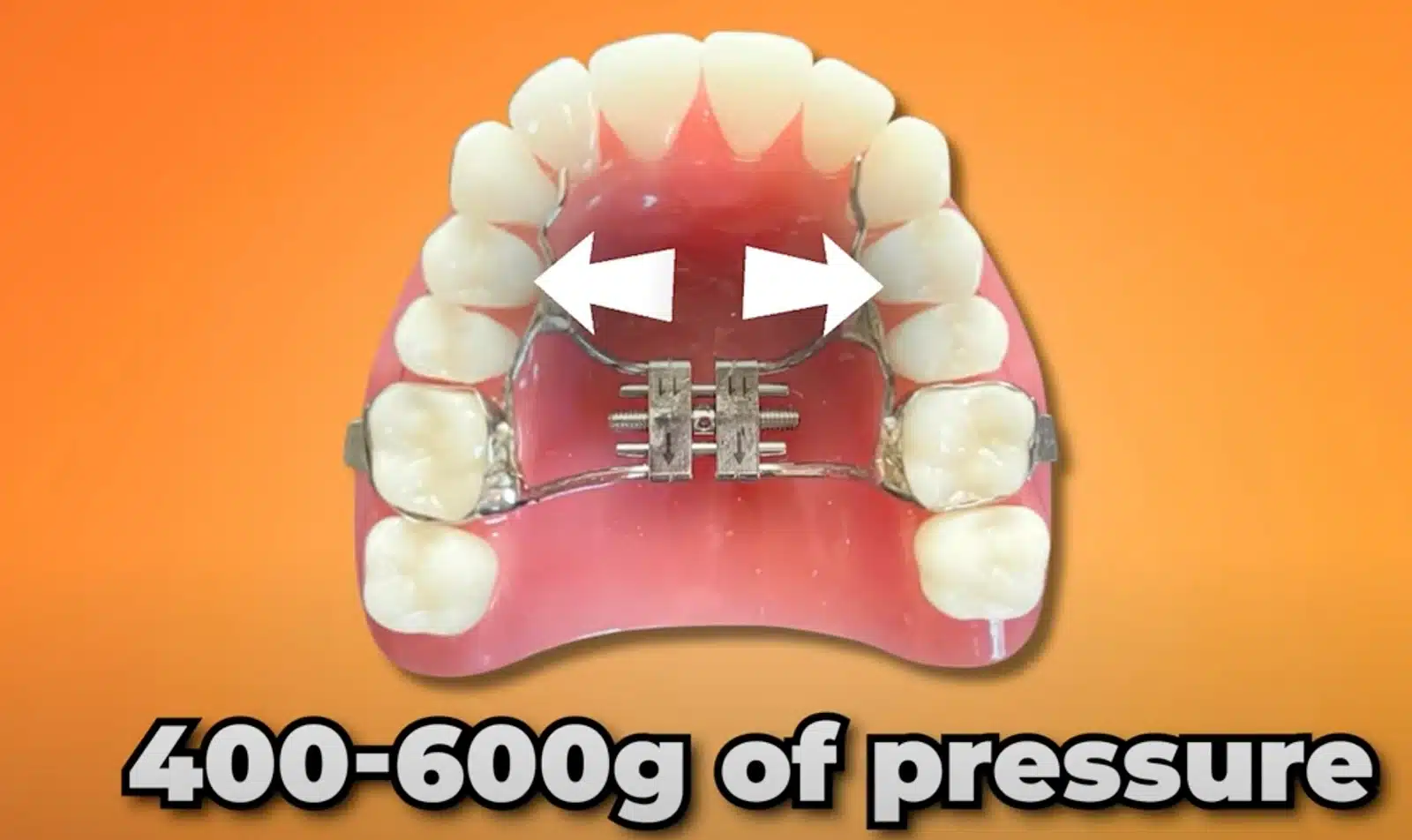
For underbite correction, underbite teeth braces work similarly, often combined with elastics that apply force in the direction needed to bring the upper and lower arches into better alignment. In growing patients, a palatal expander or facemask appliance may be used to encourage upper jaw development and reduce the prominence of the lower jaw relative to the upper. For adults with a significant skeletal underbite, orthognathic surgery in combination with orthodontic treatment delivers the most comprehensive and stable long-term result.
Clear aligner systems have expanded considerably in recent years and can handle a wider range of bite corrections than they could a decade ago. Whether aligners are appropriate for your specific overbite or underbite depends on the severity of the discrepancy and the required tooth movements. A thorough clinical evaluation, including digital imaging and bite analysis, is the only way to know which approach fits your situation.
What Happens if You Don’t Treat It?
The Long-Term Cost of Waiting
Neither an overbite nor an underbite corrects itself. Both tend to become more pronounced with time, particularly when jaw growth patterns are the underlying driver. The wear patterns they create on tooth enamel are cumulative and irreversible once significant enamel loss has occurred.
Beyond the teeth themselves, the TMJ bears the consequences of a misaligned bite over the years of daily use. Clicking, popping, jaw pain, and chronic headaches are all associated with long-term bite dysfunction. Addressing the underlying orthodontic issue doesn’t guarantee these symptoms will resolve entirely, but correcting the bite removes a major contributing factor.
Overbite and underbite aren’t conditions you have to live with indefinitely. The right treatment, started at the right time, can correct the underlying problem, protect your teeth from further wear, and give you a bite that functions the way it should for years to come. Schedule your consultation at Stellar Smiles Ortho in Colleyville today and find out exactly where you stand.
People Also Ask
At what age should an overbite or underbite be treated?
The American Association of Orthodontists recommends a first orthodontic evaluation by age seven. Early evaluation identifies developing bite problems when intervention is most effective, though treatment can be successful at any age.
Can an overbite or underbite cause jaw pain?
Yes. Both conditions create uneven bite forces that stress the temporomandibular joint over time. Jaw discomfort, clicking, and chronic tension headaches are linked to uncorrected bite discrepancies.
How long does treatment take for an overbite or underbite?
Treatment duration varies by severity and patient age. Mild cases may resolve in 12 to 18 months. More complex skeletal discrepancies, such as underbites in adults, can require 2 or more years, including any surgical phase.
Is surgery always required for an underbite?
Not always. Mild underbites, especially in children or teens with active jaw growth, can often be treated with orthodontics alone. Surgery is typically reserved for adults with significant skeletal discrepancies that braces alone can’t fully correct.
Will my insurance cover overbite or underbite treatment?
Many dental insurance plans include an orthodontic benefit that covers a portion of treatment for medically indicated bite correction. Coverage varies, so reviewing your plan details and discussing financing options with the office is the best starting point.