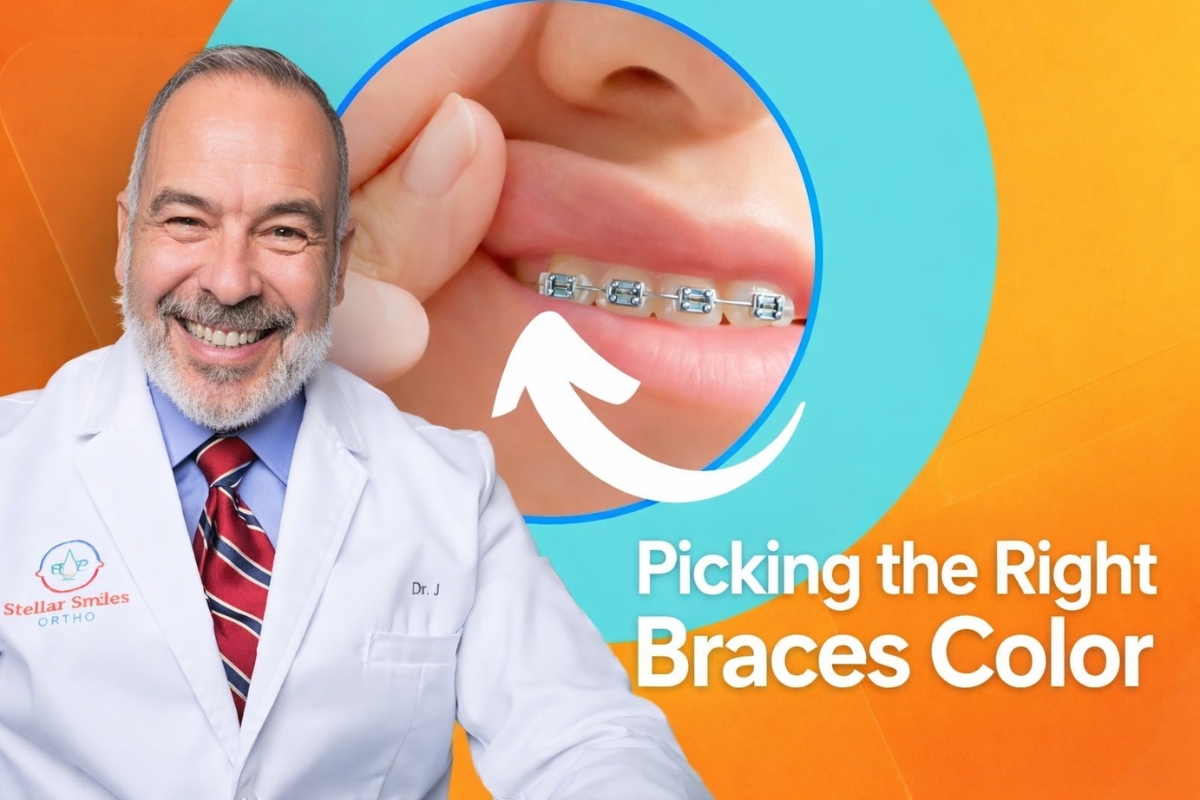
There’s something genuinely fun about that moment in the orthodontic chair when you get to pick your next band color. It’s a small choice, but it’s yours. And whether you reach for something bold, soft, classic, or seasonal, that decision tends to reflect a little more about your personality than you might expect.
Braces have come a long way from the all-metal look of decades past. Today, ligature elastics come in dozens of colors, and patients of all ages use them to make their orthodontic treatment feel like their own. This guide covers what different colors tend to communicate, which shades work best for different skin tones, and how adults and men can approach the color question without overthinking it.
Picking the Right Shade: Where to Start
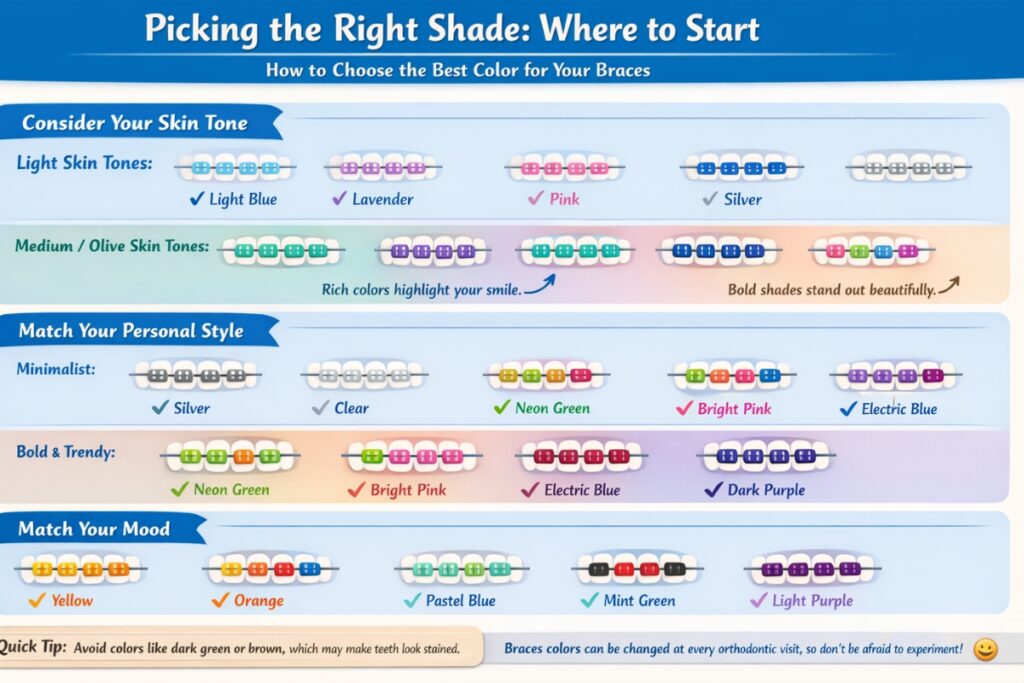
The best color for braces depends on a few things: your skin tone, your personal style, and your mood that week. Your orthodontist changes your ligature elastics at every adjustment appointment, which usually happens every four to eight weeks. That means you’re never locked in. A color that felt right last month can be something entirely different next visit.
For patients visiting Stellar Smiles Ortho for braces for adults in Grapevine, TX, band color choices are part of the conversation at every adjustment. The team takes it seriously because it matters to you, and a little personalization goes a long way in making the treatment process feel less clinical and more like something you’re actively a part of.
What Your Color Choice Might Say About You
Colors carry meaning, whether we intend them to or not. Here’s a lighthearted but grounded look at what your go-to braces color tends to signal:
Dark Blue and Navy
Reliable, calm, and put-together. Dark blue is one of the most consistently popular choices because it’s visible without being loud. It reads as confident rather than flashy, and it pairs well with nearly every skin tone. People who gravitate toward navy tend to like looking intentional without needing to make a statement.
Red and Burgundy
Bold, outgoing, and not afraid of attention. Red braces are a choice you make because you want your smile noticed. Deeper burgundy shades work particularly well on medium to deep skin tones, where the contrast creates a striking, polished effect. If you’re the type who walks into a room and starts a conversation, red tracks.
Purple and Violet
Creative, a little unconventional, and usually genuinely fun to be around. Purple is a perennial favorite, especially among younger patients and adults who want something cheerful without going neon. Softer lavender shades lean more subtle; deeper violets make more of a statement.
Light Blue and Sky Blue
Approachable, easygoing, and perhaps the most universally flattering band color available. Light blue tends to make teeth appear whiter by contrast, which is a practical bonus alongside its aesthetic appeal. It’s one of the most recommended shades by orthodontists for that reason.
Black and Dark Grey
Understated, deliberate, and a solid choice for adults who want their braces to read as minimal. Black bands are sometimes avoided because people worry they’ll look like food particles, but they photograph well and have a clean, contemporary edge when kept clean. This is a popular pick for adults who prefer something low-key but still definite.
Gold and Orange
Warm, upbeat, and a natural complement for deeper skin tones. Gold bands are one of the best color bands for braces for adults with brown or deep skin, where they echo warm undertones without clashing. Orange is similar in energy but slightly more playful. If you like being the most interesting person in the room, these are worth trying.
Green
Grounded, easy-natured, and more versatile than it gets credit for. Darker forest greens work well year-round and pair particularly well with warm skin tones. Bright lime greens are fun for a single cycle but may not have staying power. Nature lovers and sports fans with green team colors tend to have a soft spot for this one.
Choosing by Skin Tone: What Works
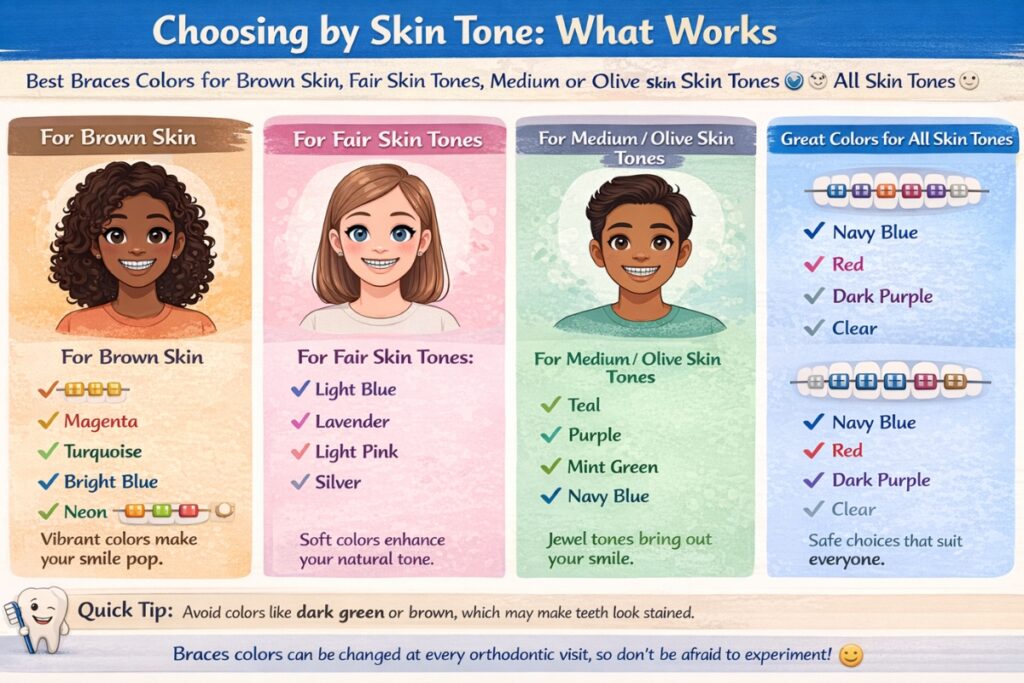
Skin tone is one of the most practical factors in choosing a band color, and it’s worth thinking about deliberately rather than just defaulting to your favorite color.
- Best braces colors for brown skin: Gold, orange, dark purple, burgundy, and royal blue all create a strong, flattering contrast against deeper skin tones. These shades enhance warmth without washing anything out.
- Fair skin tones: Softer shades like light blue, lavender, and blush pink tend to complement fair complexions without overpowering. Avoid white and yellow, which can make teeth appear less bright by comparison.
- Medium or olive skin tones: This skin tone is the most flexible. Most colors work, but teal, cobalt blue, and dark green tend to look particularly clean and intentional.
- All skin tones: Avoid white, yellow, and clear bands if keeping your teeth looking their whitest is a priority. These shades stain easily and can make enamel appear dingy between appointments.
For Men and Adults: Keeping It Clean Without Going Boring
Adults getting braces sometimes feel uncertain about color choices in a way that teenagers don’t. There’s a quiet worry that bright bands will look out of place in a professional setting. The reality is that most people around you pay far less attention to your braces’ color than you do.
The best brace color for men tends to skew toward navy, dark grey, black, or forest green. These choices are present without being distracting and hold up well across work and social settings. For women looking for the best color bands for braces for adults, dark jewel tones like deep teal, wine, and cobalt offer a polished, put-together look that works in and out of the office.
And if you’re not sure? Ask your orthodontist. Orthodontists at Stellar Smiles Ortho in Grapevine, TX, have seen thousands of color combinations and can quickly point you toward options that will photograph well, complement your complexion, and hold up between adjustments.
The Most Popular Brace Colors Right Now
Across orthodontic practices, a handful of colors show up again and again. The most popular brace color choices year after year tend to be dark blue, light blue, purple, and red. These four cover the range from understated to expressive and work across skin tones, age groups, and personal styles.
Seasonal picks add a fun layer, too. Around the holidays, red-and-green combinations are popular. In October, orange and black have their moment. For school spirit days, team colors are a natural choice. Grapevine-area patients often show up ahead of the Cowboys season with navy and silver combinations, or Mavericks blue when the playoffs heat up.
Your Next Adjustment Is a Fresh Start
Whether you’re just starting treatment or you’re a few months in and looking to switch things up, your next band change is a chance to try something new. The best color for braces is ultimately the one that makes you feel good every time you look in the mirror.
Book your next appointment at Stellar Smiles Ortho in Grapevine, TX. Our team works with patients of all ages, and we’d love to help you find a color combination that feels like you.
People Also Ask
How often can I change my braces’ color?
You can change your band color at every adjustment appointment, which happens every four to eight weeks, depending on your treatment plan. Each visit is an opportunity to try something different, so there’s no pressure to commit to one color for the long haul.
Do braces’ colors affect how long treatment takes?
No. The color of your ligature elastics is purely aesthetic and has no impact on how your teeth move or how long your orthodontic treatment takes. Treatment duration is determined by the complexity of your case, your bracket type, and how consistently you follow your orthodontist’s care instructions.
What colors make teeth look whiter?
Darker shades like navy blue, dark purple, and royal blue create contrast that makes teeth appear brighter. Light blue also has this effect. Colors to avoid if you want your teeth to look their whitest include white, yellow, and clear elastics, which tend to stain and can make teeth look duller over time.
Are clear or ceramic braces a better option if I don’t want visible color?
Clear or ceramic braces use tooth-colored or translucent brackets that blend with your enamel, making them less noticeable than traditional metal braces. They’re a popular choice for adults who want a more discreet look throughout treatment. Your orthodontist can walk you through whether clear brackets are appropriate for your specific case.
Can I request a specific color combination at my adjustment?
Absolutely. Most orthodontic practices keep a full range of elastic colors on hand, and you can mix colors across your upper and lower teeth or even alternate colors along a single arch. Some patients come in with a specific combination in mind; others prefer to browse the color wheel at the appointment and decide in the chair. Either approach works.