Choosing between clear and metal braces should be simple. One is less visible. The other is more familiar. But the decision involves more than aesthetics — it also touches on treatment complexity, lifestyle factors, maintenance habits, and what your teeth need to move correctly. Getting that choice right makes a real difference in how comfortable your treatment is and how satisfied you’ll be with the process.
Both options are genuinely effective when matched to the right patient. Neither is universally superior. What matters is understanding how they differ — not just in how they look, but in how they function — so you can have a more informed conversation with your orthodontist about what fits your specific case.
What Are Braces Made Of and Why Does It Matter?
The Materials Behind Each System
To compare these two options fairly, it helps to start with what they’re actually made of, because the material determines more than just appearance.
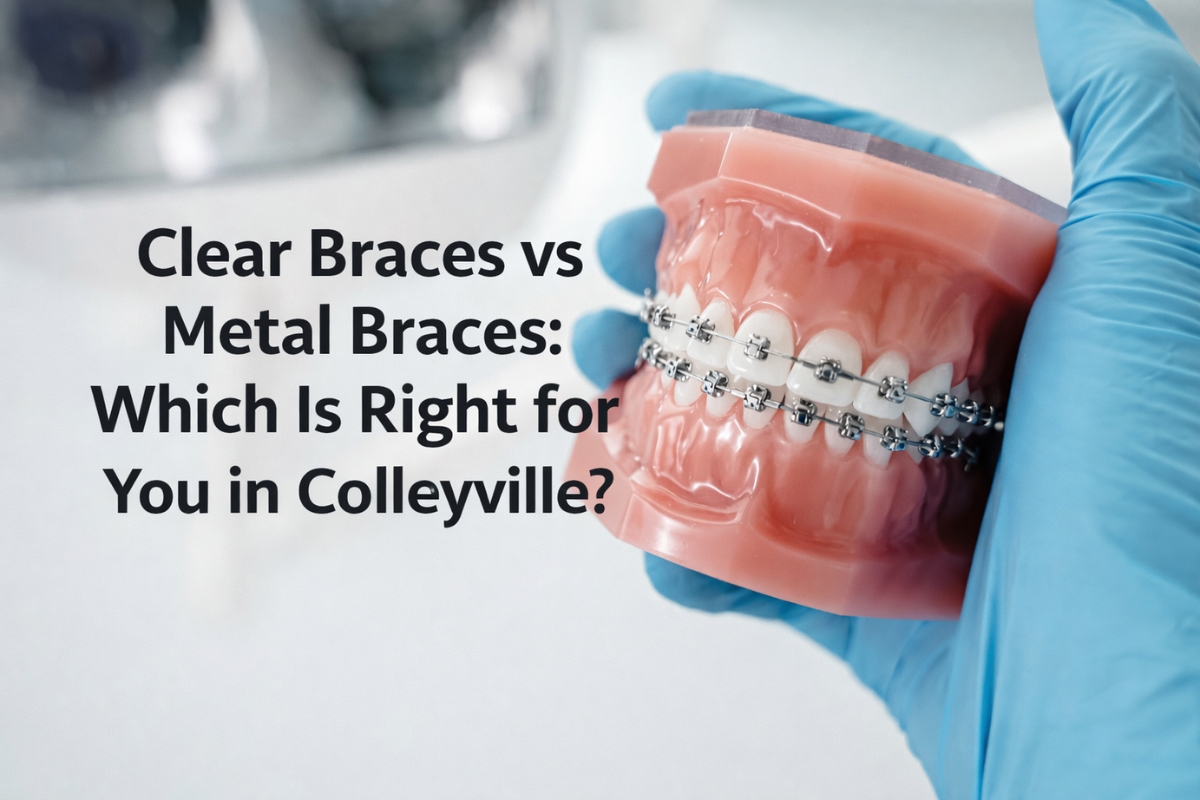
Traditional metal braces use stainless steel brackets bonded to each tooth, connected by an archwire typically made from nickel-titanium or stainless steel alloy. These materials are durable, highly resistant to breakage, and allow orthodontists to apply precise, consistent forces across a wide range of tooth movements. Metal brackets grip the wire reliably and transmit force efficiently, which is part of why they’ve remained the standard for more complex corrections for decades.
Clear braces (also called ceramic braces) use brackets made from polycrystalline alumina or monocrystalline sapphire, both of which are translucent or tooth-colored. The archwire can be matched with a tooth-colored coating, making the entire appliance significantly less noticeable against the teeth. The core mechanics are largely the same as metal braces: brackets, wires, and elastic ligatures working together to guide tooth movement.
So, what braces are the best from a purely mechanical standpoint? Metal braces retain a slight edge for complex cases like large-scale bite corrections, significant rotations, or cases involving tooth extractions, because the bracket-wire interface is more precise and the material doesn’t change over time. Ceramic brackets are slightly more brittle and can fracture under high force loads, which limits their use in certain clinical situations.
For Colleyville families comparing options, an orthodontist in Colleyville, TX, will walk through which system is clinically appropriate before aesthetics even enter the conversation.
Clear Braces vs Metal Braces: The Real Comparison
Visibility, Comfort, and Maintenance
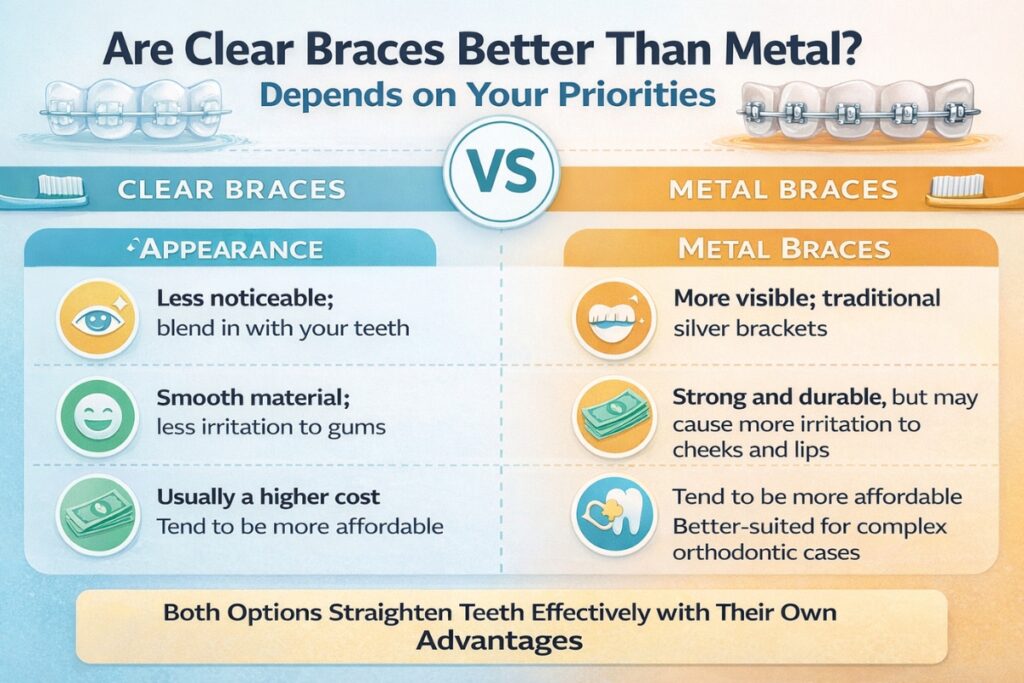
The most obvious difference is appearance. Ceramic brackets blend with the natural color of your teeth, making them far less noticeable in conversation or photos. For teenagers and adults who are self-conscious about wearing braces, this matters and it’s a legitimate reason to choose them when the clinical picture allows.
Comfort is more nuanced. Both systems use the same archwire mechanics, so the pressure felt during tooth movement is broadly similar. However, ceramic brackets have slightly more surface friction than metal, which can mean that certain movements require more force or take marginally longer. The brackets themselves are also slightly larger than their metal counterparts, which some patients notice when running their tongue along the teeth.
Maintenance is where the differences become more practical. Ceramic brackets can stain from coffee, tea, red wine, turmeric, and other pigmented foods and drinks. The brackets themselves don’t stain permanently, but the ligatures (the small elastic ties holding the wire in place) can discolor noticeably between adjustment appointments. Patients who are meticulous about rinsing after meals and limiting staining beverages generally manage this well. Those who aren’t prepared to adjust their habits may find the staining frustrating.
Metal braces have no staining concern and tend to be more forgiving in terms of maintenance. They’re also more resistant to chipping or fracturing during contact sports or other physical activity, which is worth considering for younger patients who play sports regularly.
Are Clear Braces Better Than Metal? Depends on Your Priorities
Matching the System to the Patient
The honest answer to whether clear braces are better than metal braces is: it depends entirely on what you’re optimizing for. They’re not better in every dimension, but for the right patient, they offer real advantages that make treatment significantly more comfortable from a confidence standpoint.
Clear braces tend to work well for:
- Adults and teens who are highly conscious of appearance during treatment
- Patients with mild to moderate crowding, spacing, or bite corrections
- Patients are committed to careful oral hygiene and dietary mindfulness
- Cases where treatment complexity falls within the range that ceramic brackets handle reliably
Metal braces are often the better clinical choice for:
- Cases involving complex bite correction, including overbite or underbite treatment, require significant force
- Younger children may be less consistent with maintenance
- Patients who play contact sports or have habits that increase the risk of bracket fractures
- Situations where treatment efficiency and precision are the top priorities
It’s also worth noting that clear aligners like Invisalign represent a third category entirely distinct from both bracket systems. Aligners use removable plastic trays rather than bonded brackets, and they suit a different clinical profile again. Patients sometimes conflate ceramic braces and clear aligners, but they work quite differently and are suited to different cases.
What the Evaluation at Stellar Smiles Ortho Looks Like
How the Decision is Made
Before making any recommendation, your orthodontist needs a complete clinical picture. At Stellar Smiles, the evaluation process includes digital X-rays, 3D imaging, a bite analysis, and a review of any dental history relevant to treatment. This assessment establishes the complexity of your case and determines which system can achieve the outcome you’re after within a realistic timeframe.
Serving patients across Colleyville and throughout northeast Tarrant County, Stellar Smiles takes a practical approach to this decision — one focused on what your teeth need rather than on defaulting to a single system for everyone. Some patients come in expecting clear braces and find that their case genuinely calls for metal. Others assume metal is the only viable option and discover that ceramic brackets provide just as effective correction.
The conversation is always grounded in the clinical reality of your case first, with your preferences factored in wherever they don’t compromise the outcome.
Find Out Which Option Fits You
You don’t have to figure this out on your own. The right answer depends on your teeth, your lifestyle, and what your treatment needs to accomplish, and that’s exactly what a consultation is for. Schedule your appointment at Stellar Smiles Ortho in Colleyville today and get a clear, honest recommendation built around your dental case.
People Also Ask
Do clear braces take longer than metal braces?
Not significantly for most cases. Ceramic brackets may add a small amount of time to complex movements due to increased friction, but the overall treatment duration is comparable across cases within their appropriate clinical range.
Can clear braces handle severe crowding or bite issues?
Mild to moderate cases, yes. For severe crowding, significant bite correction, or cases requiring extractions, metal braces typically offer more precision and force control than ceramic brackets can reliably provide.
Do ceramic braces stain permanently?
The ceramic brackets themselves are stain-resistant. However, the elastic ligatures holding the wire in place can discolor between appointments. Regular rinsing and limiting staining foods and drinks keep this manageable.
Are clear braces more expensive than metal?
Ceramic braces typically cost more than metal braces. The exact difference varies by practice and case complexity. Many orthodontic offices offer payment plans and accept insurance that may offset the difference.
Can adults get metal braces, or are they only for kids?
Metal braces are equally effective for adults. Many adult patients choose them for their precision and durability. The choice between clear and metal is based on preference and clinical needs, not age.